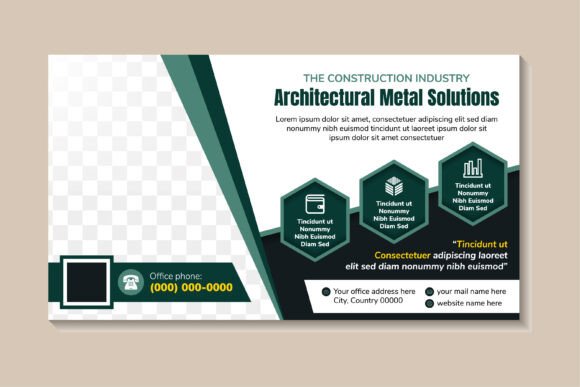
Architectural Metal Horizontal Banner: A Strategic Visual Asset for Modern Branding
In competitive markets like real estate, architecture, construction, and property investment, visual identity must do more than look appealing—it needs to communicate trust, stability, and professionalism immediately. A well-crafted Architectural Metal Horizontal Banner serves exactly that role. It is not just a decorative graphic; it is a deliberate branding tool that merges the strength of metal-inspired textures with a clean, modern layout, often featuring green accents on a white background. When used thoughtfully, it can amplify social media presence, support consistent campaign messaging, and turn a simple post into a memorable touchpoint for potential clients.
This article explores how professionals—real estate agents, construction company owners, architects, property developers, and marketers—can move beyond simply inserting a banner into a feed and instead integrate it as part of a measurable communication strategy. We’ll examine not only the practical features of a high-resolution, fully editable vector banner but also the decision-making framework that transforms it from a template into a growth lever.
Understanding the Role of Horizontal Banner Designs in Architectural Marketing
The horizontal layout itself is a choice. Unlike square formats that compete for attention in a grid, a horizontal banner mimics the way our eyes scan landscapes, websites, and printed portfolios. It offers room to layer information: a subtle metallic texture, a professional headshot, property imagery, and a clear call-to-action. The architectural metal theme—often rendered through brushed steel, iron grid patterns, or polished silver gradients—immediately associates the content with industries built on permanence and precision. When paired with green, a color linked to growth, stability, and eco-conscious design, the banner tells a story before a single word is read.
For social media feeds, a horizontal banner can serve as a cover photo for Facebook business pages, a LinkedIn Featured section backdrop, a YouTube channel art element, or the header of a listing presentation PDF. In each case, it establishes a visual anchor. A thoughtful real estate professional might use the same Architectural Metal Horizontal Banner template across multiple platforms, customizing only the text or a secondary image while maintaining a recognizable design system. This consistency builds mental availability, which is critical when a prospect is ready to contact an agent or inquire about a property.
When to Use an Architectural Metal Horizontal Banner
Not every communication needs a highly designed banner. Overuse can dilute its impact. The key is to identify moments where the banner adds strategic value. Consider these scenarios:
- Property Launch Campaigns: When introducing a new residential or commercial development, the banner can unify all social posts, email headers, and print flyers around one aesthetic. The metal element hints at structural quality, while the green suggests sustainable living or financial growth.
- Agent Branding Packages: Individual real estate agents can repurpose the banner as a signature backdrop for market updates, “Just Sold” announcements, or educational content. By customizing the shapes and text, each piece remains fresh yet unmistakably theirs.
- Construction Project Milestones: Contractors and architects can post progress photos with the banner as a frame, turning a raw construction site image into a polished update that stakeholders and future clients can trust.
- Financial and Loan Services: Mortgage brokers or property investment advisors may use the same banner design to create infographics about interest rates or buyer guides. The metal and green palette reinforces confidence and financial wellbeing.
- Event and Open House Promotion: A horizontal banner easily accommodates date, time, and address details without feeling cluttered. Because the file is high-resolution (300dpi), it can be printed in large formats for signage without pixelation.
In each case, the banner becomes a bridge between the brand’s visual identity and the audience’s expectations of reliability and expertise. Using it randomly, without a content calendar, risks making it just another decorative image. Planning the timing and context makes all the difference.
Key Design Elements that Enhance Communication and Brand Perception
The effectiveness of an Architectural Metal Horizontal Banner depends on more than the concept. The technical specifications matter as much as the aesthetics. A file built with 100% vector graphics at 300dpi ensures that resizing from a business card to a billboard never compromises clarity. This is particularly important when you need to edit text, swap colors, or adjust shapes to align with specific brand guidelines. Because vectors use mathematical paths, each element remains crisp and editable in software like Adobe Illustrator. The inclusion of formats—AI, EPS, SVG, and JPG—provides flexibility: EPS for print vendors, SVG for responsive web use, AI for deep modifications, and JPG for quick social uploads.
The green elements on a white background serve a dual purpose. White space keeps the design breathable, directing attention to the content rather than overwhelming it. Green acts as an accent that can highlight calls-to-action, headlines, or a logo. Psychologically, green in real estate often signifies fresh starts, eco-friendly features, or financial prosperity—all messages that resonate with homebuyers and investors. The metallic layer, whether subtle or prominent, adds a tactile dimension that flat designs lack. When a potential client scrolls through a feed, a banner that seems almost tangible can stop the scroll and invite a closer look.
The Advantage of Fully Editable Text, Shapes, and Colors
Templates often fail when they cannot be adapted to a unique voice. An editable Architectural Metal Horizontal Banner removes that barrier. You can change the headline font to match your email signature, replace the accent green with your brand’s specific shade, and add or remove decorative metal lines to suit the amount of text you need. This adaptability means one purchase serves multiple campaigns. For instance, a property management company might modify the template for a rent promotion, a maintenance notice, and a resident event—each time keeping the same structural feel but altering the messaging. The time saved by not starting from scratch compounds quickly, freeing resources for higher-level strategic tasks.
Practical Planning for Your Banner Implementation
Approaching the banner as a tactic without strategy leads to inconsistent messaging. Start by defining the goal. Are you using the horizontal banner to increase brand recognition, generate property leads, or educate your audience about market trends? The answer determines everything from text hierarchy to image selection. A post aimed at accelerating a sale might feature a bold price drop announcement with a vibrant green call-to-action block. A weekly market snapshot might use a more subdued layout with a photo of the city skyline and a brief analyst quote.
Next, map out the specific placement. On social media, a horizontal banner may need slight cropping for Instagram Stories, but it works perfectly as a pinned post on Facebook or a LinkedIn article header. For email campaigns, the banner can serve as the top graphic, immediately orienting the reader to your brand before they scroll. If you plan to print, confirm that the file is saved in CMYK color mode (you can adjust within the editable AI file) and at 300dpi. The SVG format makes it possible to integrate the banner into responsive emails or website designs without loss of quality.
Potential Pitfalls and How to Avoid Them
The greatest risk with any pre-designed asset is using it without intentionality. A metal-themed banner placed next to unrelated, low-quality images can weaken brand trust. Another common mistake is overloading the layout with text, which defeats the purpose of a clean, professional design. The rule of thumb: let the visual elements speak, and use text sparingly to reinforce the message. Always preview the banner on mobile devices before publishing. A horizontal banner that looks compelling on a desktop monitor can become illegible on a phone screen if the font size is too small or the most important detail sits too close to the edges.
There is also the risk of blending in. If every competitor uses similar metallic and green templates, the banner loses its ability to differentiate. Combat this by customizing not just the text but also the texture intensity, adding a photo overlay unique to your market, or combining the banner with a distinctive video frame. The editable nature of the file means you can introduce subtle animations in a video version, keeping the metal theme but adding movement that captures eye attention in a feed.
Strategic Integration into Your Long-Term Marketing Framework
An Architectural Metal Horizontal Banner is not a one-off tool. It belongs inside a broader visual ecosystem. When you treat it as a repeatable asset, you can develop templates for different categories: one for luxury listings with gold metal accents, another for affordable housing with softer green tones, and perhaps a third for investor reports with darker industrial textures. This modularity accelerates content production while keeping your brand recognizable. Over time, you can measure which banner variations generate higher engagement or click-through rates, then refine accordingly.
From an SEO perspective, using original graphic elements on your website—such as custom-designed banner images for blog posts or service pages—can improve user experience signals. While the banner itself doesn’t directly affect search rankings, a clean, professional layout can reduce bounce rates and encourage site exploration, indirectly supporting your organic visibility. Additionally, the SVG format allows you to embed the banner with semantic code, improving accessibility and loading speed compared to heavy JPG images.
Making the Right Decision: Choosing and Customizing Your Architectural Metal Banner Template
When evaluating a template file, look beyond the preview image. Confirm the actual delivered formats include AI and EPS files, which guarantee full editability. The 300dpi resolution is essential for any print application. Ask yourself: does the green element pair well with the metal texture, or does it clash? A high-quality design will feature a harmonious blend, often with layered effects that create depth without distraction. The white background should remain truly white, not off-white, to ensure professional output on screens and paper alike.
Consider the long-term utility. A banner that only works for one type of post limits your return. Because the described asset includes editable text, shapes, and colors, you can morph it over months. Use it to advertise a new investment opportunity one week, to announce a company milestone the next, and to frame a client testimonial the week after. This versatility is what transforms a one-time download into a core part of your visual toolkit. Always store a master copy of the vector file and create duplicates for each campaign to preserve the original structure.
Ultimately, the difference between a forgettable post and one that drives inquiries often comes down to the perceived professionalism and cohesion of your visuals. A thoughtfully used Architectural Metal Horizontal Banner signals to your audience that you value clarity, consistency, and the details that matter in industries where trust is earned over time. Whether you are an independent agent building a personal brand or a marketing manager overseeing multiple property listings, the right graphic template can help you communicate with authority and creativity—without starting from scratch every time.